

Programme Specialist, NYDF Global Platform

Creative Communications & Social Media Analyst
Reflections from a two-day exchange in Rome
Every year, the world loses roughly 11 million hectares of forest to deforestation, an area larger than Iceland. Much of this loss is driven by agricultural expansion, as global demand for commodities continues to shape how land is used in producing countries.
Over the past two decades, countries have invested in forest governance and monitoring systems to reduce deforestation under the REDD+ framework. These efforts have strengthened institutions and created important foundations for sustainable land use. Despite hopeful evidence that the annual rate of forest loss has declined compared with previous decades, deforestation still continues at an alarming rate.
Coffee and cocoa illustrate both the challenge and the opportunity. Their production can contribute to forest loss, but these commodities can be grown in agroforestry systems and even in the forest, like in Ethiopia. The majority of coffee and cocoa across the globe is grown by smallholder farmers, making these commodities an important link between rural communities and global markets. Production takes place locally, while demand, prices and investment decisions are shaped by supply chains that stretch across continents.
Shifting to sustainable production therefore requires more than better agricultural practices. It requires changes in how global markets reward and incentivize sustainable practices (which many farmers are already implementing) and how investments are structured.
This shift is becoming increasingly urgent. Climate change is already affecting coffee and cocoa-growing regions, while many smallholder farmers face significant barriers to accessing the finance needed to adopt more resilient practices or simply to continue farming coffee and cocoa. Failure to address the economic constraints and market shifts risks placing an inequitable burden on farmers and threatens their livelihoods.
Deforestation-free production can be an attractive economic choice if paired with key enabling factors like better access to finance for famers through, for example, updated risk profiles for investors; stronger value chain partnerships including, direct sourcing agreements; data-informed decision making enhanced through traceable supply chains; and incentives that reward sustainable practices at the farm level.
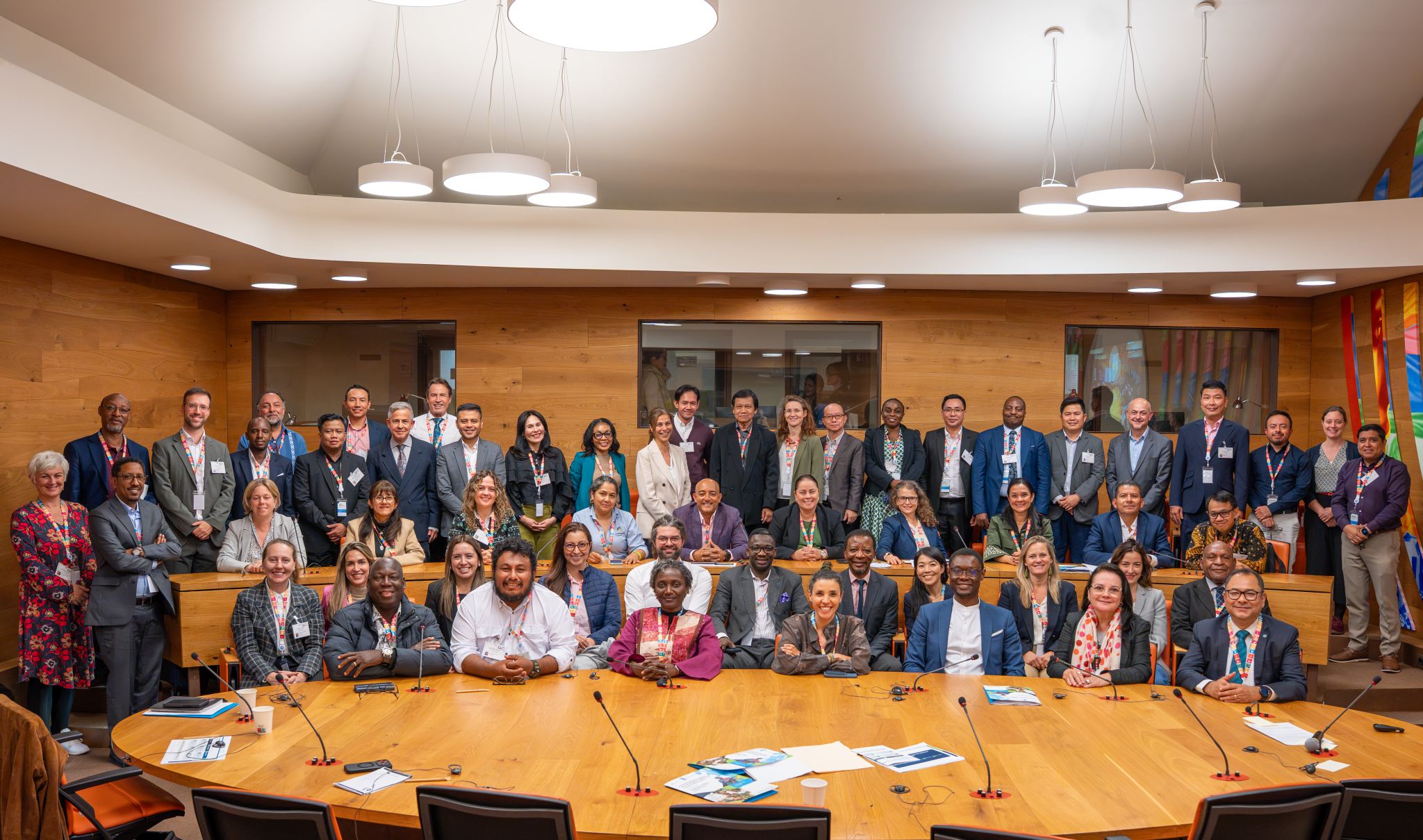
UNDP was honored to participate in a dialogue on these topics e in Rome from 29-30 October called: Investable Beans: De-risking and Financing Forest-Positive Supply Chains in partnerships with the Food and Agriculture Organization, World Bank Group and the UN-REDD Programme and critical supply chain actors such as producer organizations, businesses, financial institutions, governments and other development partners.
Connecting production, markets and finance
The discussions drew on experiences from across coffee and cocoa supply chains, from 18 different countries, examining how sustainable production can become commercially viable for farmers and attractive to investors.
For producers, the barriers are often practical. Farmers may already be growing commodities without clearing forests, but lack the technology, financing or market access needed to demonstrate compliance and benefit from their efforts.
In Colombia, for example, Comepcafé, a cooperative representing 1,400 coffee-growing families, strengthened its traceability systems with UNDP support, enabling the export of 89,000 kilograms of deforestation-free coffee. Its experience demonstrates how targeted investments can help producers access international markets.
Businesses face a different set of challenges. Sustainable sourcing requires reliable and transparent information, long-term relationships with producers and the integration of environmental considerations into commercial decisions.
Veronica Rossi, representing the Lavazza Group shared how more than two decades of work with coffee-growing communities through Fondazione Lavazza are helping inform sustainability considerations within its commercial operations. This experience illustrates how partnerships with producers, such as those in Ecuador, and alignment with national priorities can contribute to more resilient supply chains.
The discussions also examined how financial institutions and public authorities can help address the investment barriers that prevent these approaches from reaching scale. Risk-mitigation mechanisms, supportive policies and financial instruments tailored to agricultural production can help direct capital towards sustainable practices.
An important lesson emerging from these exchanges was that deforestation-free production should be viewed as more than justf compliance with market requirements. Investment in traceability, climate resilience and sustainable land management can also create economic opportunities across the entire value chain, maintain farmer livelihoods, and support more reliable production.
But these benefits depend on how costs, risks and rewards are distributed. Farmers cannot be expected to finance the transition alone, and no single business or institution can transform an entire supply chain independently. Participants approached the challenge from four perspectives: policy, finance, business and producers. Producers need access to finance and markets, but those opportunities depend on business relationships, investment conditions and public policies. Financial institutions need viable investment opportunities, while governments can help create the regulatory and institutional conditions that make them possible.
The importance of jurisdictional approaches
The experiences shared in Rome point to a wider lesson for the future of sustainable commodity production.
The global transition toward deforestation-free coffee and cocoa supply chains is often framed as a compliance challenge for producers and companies. However, the underlying challenge is much broader: deforestation is a landscape-level problem driven by governance gaps, limited rural investment, insecure land tenure, social and gender inequalities, weak traceability systems, and insufficient incentives for sustainable production. Many of the country partners who participated are also implementing national REDD+ frameworks by reducing emissions from deforestation and forest degradation. Jurisdictional REDD+ (J-REDD+) helps deliver and finance these results by linking reduced emissions to the generation and sale of carbon payments or credits. This places J-REDD+ not as a parallel environmental initiative, but as a core component of the architecture needed to make forest-positive commodity landscapes investable, competitive, equitable, durable and resilient. These parallel efforts have recently been highlighted by the Accountability Framework in their white paper. UN-REDD supports countries across the full carbon market value chain, from REDD+ readiness and MRV to benefit-sharing, as well as in advancing implementation of deforestation-free supply chains. This approach can provide the missing bridge between forest conservation objectives and the emerging deforestation-free commodity agenda.
The knowledge and experience needed to advance this transition already exist in many places. The question now is how to finance it urgently, distribute its benefits more fairly and make sustainable production economically viable across entire supply chains.
This event was co-organized by FAO, the World Bank, UNDP and the UN-REDD Programme.